Charlotte Real Estate Investors Pivot to Build-to-Rent
Charlotte-area investors led U.S. build-to-rent delivery volumes in Q1 2026, accounting for 14% of all new single-family rental units delivered nationally.
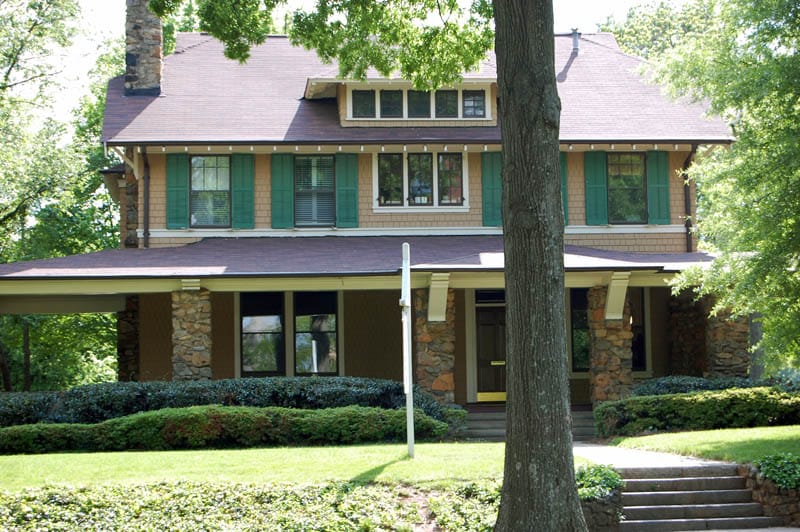
Charlotte-area real estate investors led U.S. build-to-rent delivery volumes in the first quarter of 2026, completing 2,280 new single-family rental units. The figure represented 14% of all build-to-rent units delivered nationally during the quarter, per John Burns Research and Consulting data.
Build-to-rent, or BTR, refers to purpose-built single-family rental communities that are constructed, leased, and operated similarly to apartment communities, but with detached or townhome-style units. The segment emerged as a discrete property type in the mid-2010s and has grown rapidly, accounting for approximately 9% of all single-family permits in 2025, up from 2% in 2019.
"Charlotte has established itself as a leading test market for build-to-rent at scale," said Ruben Gonzalez, senior vice president at John Burns Research. Gonzalez pointed to the metro's land availability, pro-development regulatory posture in outer-suburb submarkets, and steady in-migration demand as favorable conditions.
Major BTR operators with Charlotte portfolios include American Homes 4 Rent, Progress Residential, Invitation Homes, and Tricon Residential. AMH reported Charlotte occupancy at 94.6% in its Q4 2025 earnings release, with average monthly rent of $2,145 per leased home. Tricon, which went private in 2024 after acquisition by Blackstone, noted continued Charlotte portfolio expansion as part of its 2026 plans.
Home construction costs have stayed favorable relative to alternative markets. Charlotte-area BTR single-family land and construction costs averaged $268,000 per completed unit in Q1, compared with $312,000 in Dallas-Fort Worth and $358,000 in Phoenix, per Burns data. The cost advantage has supported continued investor commitment.
Not all stakeholders welcome the BTR expansion. Neighborhood associations and some municipal planning officials in Charlotte-area Mecklenburg and Union counties have pushed back on rezoning requests. The Charlotte City Council in February considered a moratorium on new BTR developments, but ultimately adopted a less restrictive set of development standards addressing density, landscaping, and common-amenity requirements.
Renter demographics in Charlotte BTR communities differ from both traditional single-family homeowners and apartment renters. A Burns Research consumer survey of Charlotte BTR residents found 68% of households had school-age children, 52% had relocated from out of state in the past two years, and 44% said they intended to purchase a home within three years. The findings suggest the product serves a bridging role for households transitioning between relocations or toward homeownership.
Rent growth in Charlotte's BTR segment was modest at 1.8% year-over-year in March, per Yardi Matrix, reflecting the large supply response to sustained demand. Nonetheless, the operational metrics support continued capital deployment. Institutional investors have committed approximately $4.8 billion to Charlotte-area BTR development pipelines for 2026 and 2027, per Burns Research. That flow of capital is likely to keep the metro among the national BTR leaders through at least 2027.