Repair or Improvement? The IRS Line That Decides What Landlords Can Deduct for 2026
A $1,450 water heater can be a 2026 deduction or a 27.5-year depreciation schedule, depending on one election. Here is how the repair rules, safe harbors and 1099 threshold work before December 31.
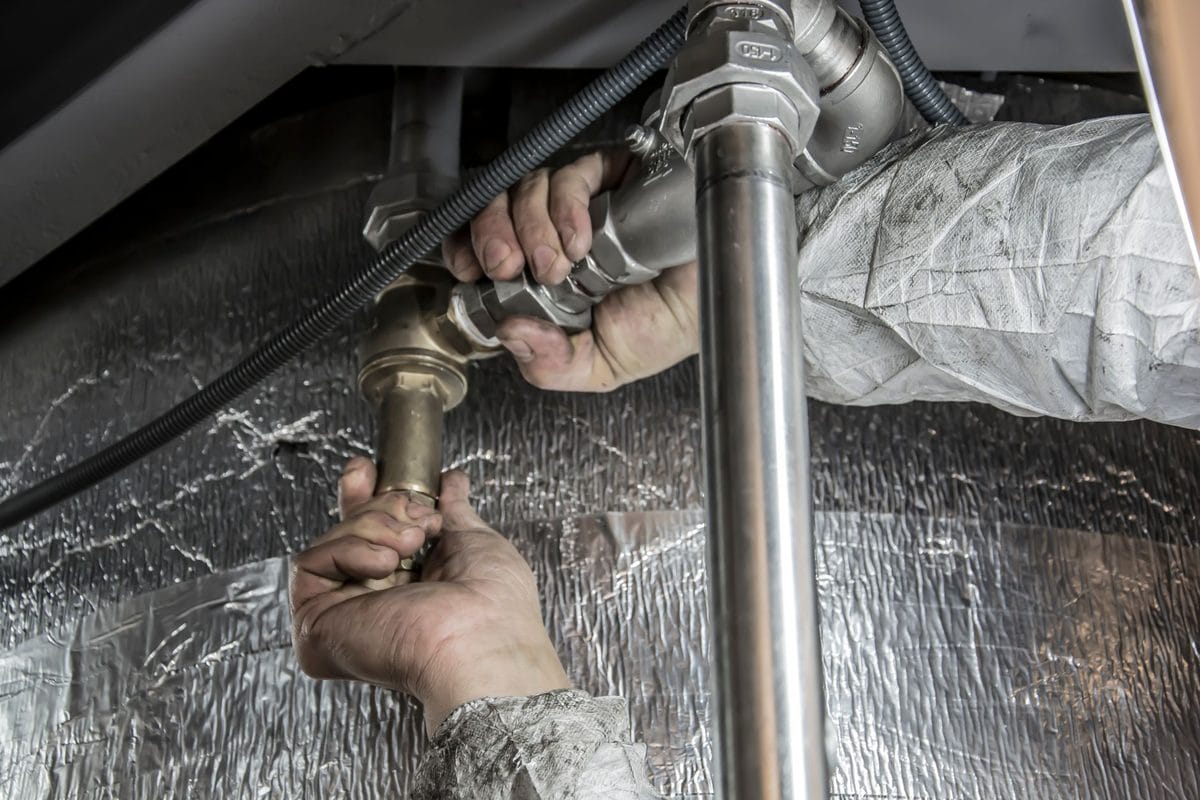
Say the water heater in one of your rentals quits on a Sunday in October and the plumber's invoice comes to $1,450. The IRS's own rental guide, Publication 527, lists "water heater" in its table of improvements, and improvements are not deducted when you pay for them. They are depreciated, which for a residential rental building and structural parts such as furnaces and water pipes means 27.5 years, or about $53 a year for this one. Make a single election on your return and the same invoice becomes a $1,450 deduction in 2026. Nothing about the water heater changes between those two outcomes, only the paperwork around it, and that paperwork is still yours to arrange until December 31.
Why the Label Matters More Than the Receipt
A deduction spread over 27.5 years is worth a fraction of the same deduction taken now.
Publication 527 says you generally deduct rental expenses in the year you pay them, and that covers repairs and maintenance as long as the cost does not have to be capitalized. Capitalized costs go onto a depreciation schedule instead. Appliances, carpeting and furniture used in a residential rental are 5-year property, while the building itself and its structural components run 27.5 years. A $9,000 roof replacement treated as a repair cuts your 2026 rental income by $9,000; treated as an improvement, it produces roughly $327 a year for the next 27 years. Three provisions in the IRS tangible-property rules decide most of the borderline cases for small landlords, and each one has a dollar limit that is easy to cross by accident in the fourth quarter.
What the IRS Counts as an Improvement
Publication 527 sorts improvements into three tests. A betterment fixes a pre-existing defect, enlarges the property, or raises its capacity, strength or quality. A restoration replaces a substantial structural part or rebuilds the property to like-new condition. An adaptation changes the property to a use that is not consistent with the one it had when you began renting it. Anything that trips one of the three gets capitalized, and Table 1-1 in the publication lists the usual suspects: a new roof, a furnace, wiring upgrades, kitchen modernization, flooring, attic and wall insulation, and yes, the water heater.
Patching drywall, clearing a drain, repainting between tenants and swapping a failed faucet are repairs, and they come off this year's income with no special paperwork. The gray zone sits around the word "substantial." Replacing a dozen shingles after a storm is maintenance, but replacing the whole roof is a restoration, and no amount of creative invoicing turns the second into the first.
The $2,500 Safe Harbor Settles the Small Stuff
Under the de minimis safe harbor, you can deduct purchases of tangible property up to $2,500 per invoice or per item, provided your books treat them as expenses. The IRS applies the $2,500 figure to taxpayers without an audited financial statement, which describes nearly every individual landlord. That puts the $1,450 water heater inside the line, along with a $1,100 refrigerator, while a $3,400 furnace falls outside it. Going over the limit does not force capitalization by itself, since the IRS says the amount is not a ceiling on what you can deduct. The furnace simply goes back to the ordinary repair-versus-improvement test.
You make the election by attaching a statement titled "Section 1.263(a)-1(f) de minimis safe harbor election" to your timely filed original return, extensions included, with your name, address and taxpayer identification number. It is an annual election, so no Form 3115 is needed, and it is all or nothing for the year: every qualifying purchase gets expensed, not just the ones you pick. One condition catches people. The IRS expects your own books to treat these items as expenses under a consistent policy that existed at the start of the year, so if your records capitalized small purchases in 2026, talk to your CPA before you elect.
Make this election every year. It costs one short statement and ends the argument over every receipt under $2,500.
The 2% Rule Is a Cliff, Not a Ceiling
The safe harbor for small taxpayers covers bigger jobs, with a catch. If your average annual gross receipts are $10 million or less and the building's unadjusted basis is under $1 million, you may deduct repairs, maintenance and improvements for the year when the total spent on that building does not exceed the lesser of 2% of its unadjusted basis or $10,000. Unadjusted basis means what the structure cost before any depreciation, which leaves out the land under it. On a rental house with a $250,000 building basis the cap is $5,000, and the $10,000 limit only takes over once the basis reaches $500,000. Spend $5,200 on that house in 2026 and the safe harbor is gone for the year, not trimmed by $200. You elect it with another statement on the return, and the IRS counts improvements in the total, so one big job can swallow the whole allowance.
| Safe harbor | Limit | Best for | How you claim it |
|---|---|---|---|
| De minimis | $2,500 per invoice or item | Water heater, refrigerator, a single appliance | Election statement with a timely filed return |
| Small taxpayer | Lesser of 2% of building basis or $10,000 a year | A year of mixed repairs on one building | Election statement with a timely filed return |
| Routine maintenance | No dollar cap | Work you expect to repeat more than once in 10 years | No election; all four IRS tests must be met |
The routine maintenance safe harbor is the odd one out. It has no dollar cap, but it never applies to betterments, and the work has to be recurring, driven by normal use, aimed at keeping the property in ordinarily efficient operating condition, and expected more than once in 10 years for a building.
Contractors: The Paperwork Threshold Just Moved
For payments made in 2026, the reporting threshold for Form 1099-NEC rises from $600 to $2,000, according to the IRS instructions for the form, with inflation adjustments possible from 2027. The instructions apply only to payments made in the course of a trade or business, and whether your rentals qualify is a question for your CPA. Nolo, a widely used landlord-tax reference, advises landlords to file anyway, partly because compliance helps support treating the rental activity as a business for the 20% pass-through deduction. Payments by credit card or payment app are reported by the processor on Form 1099-K, and payments to corporations are generally exempt, so the names that land on your list are mostly unincorporated contractors you paid by check or bank transfer. The deadline is January 31, and in 2027 that is a Sunday, so the due date moves to Monday, February 1.
Get a Form W-9 from every contractor before the first payment goes out. A payer with no taxpayer identification number on file is supposed to withhold a flat 24% under the backup withholding rules, and no landlord wants to explain that to a roofer in January.
Between Now and December 31
Because cash-basis landlords deduct when they pay, a bill settled on December 29 belongs to 2026 and one settled on January 2 does not. That leaves roughly twelve weeks from today to sort the year out, and the list below is where to spend them.
- Total each building. Add up every repair, maintenance and improvement invoice by property, then compare the number with 2% of that building's unadjusted basis.
- Sort the receipts into clear repairs, items under $2,500, and capital work.
- Look at appliances separately. Stoves, refrigerators and carpeting are 5-year property, and Publication 527 says the 100% special depreciation allowance is restored for qualified property acquired and placed in service after January 19, 2025, so a $3,000 range that misses the $2,500 test can generally still be written off in full. A roof or a furnace gets no such treatment because it belongs to the 27.5-year building, which is the gap a cost segregation study is built to narrow.
- Pull your mileage log. The IRS business rate is 72.5 cents a mile for January 1 through June 30, 2026 and 76 cents from July 1. Local trips to collect rent or maintain a rental are deductible, but the drive from your house to the property is generally commuting unless your home is your principal place of business, and the IRS wants written records either way.
- If you pay estimated tax, the final 2026 installment is due January 15, 2027.
The Stack of Invoices
Print the year's invoices, sort them into the three stacks, and write each building's total on the top sheet. If one building is already sitting near its 2% line, the next contract you sign for it is really a January job. And if the stacks come out clean, the only thing left is to have your CPA check the election statements before the return goes out. This is general information, not tax advice, so confirm every classification with a professional who has seen your actual books.