FHA 203(k) Renovation Loans in 2026: How Buyers Finance a Fixer-Upper and the Repair Bill in One Mortgage
A fixer-upper in Rochester sold for $76,000 less than move-in-ready comps two streets over — and the buyer financed the whole gap, purchase price plus repairs, in a single FHA mortgage.
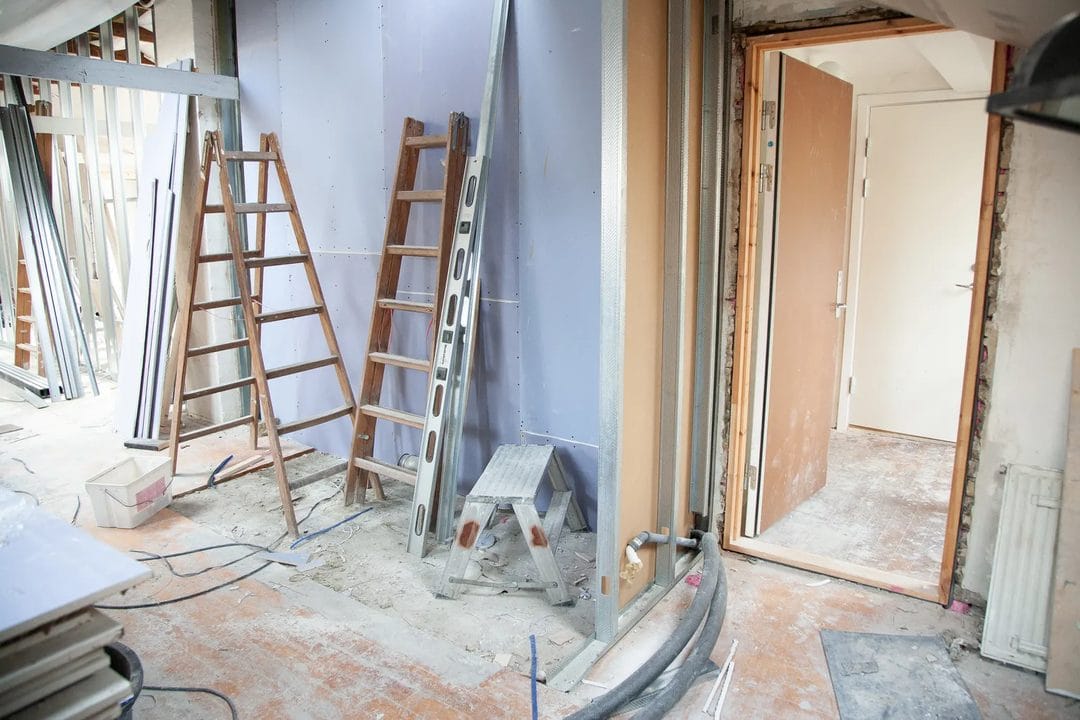
A three-bedroom colonial in Rochester, New York listed for $189,000 last month with a kitchen that hadn't been touched since the Reagan administration, a roof with maybe five years left in it, and a basement that smelled like a problem nobody wanted to name out loud. Move-in-ready listings two streets over were going for $265,000. The buyer who eventually won the Rochester house didn't bring extra cash to the table — she brought an FHA 203(k) loan, which let her borrow the purchase price and the renovation budget as a single mortgage, at a single closing, with a single monthly payment.
That structure is why 203(k) volume has been climbing at FHA-approved lenders through 2026. Move-in-ready inventory carries a premium buyers can't always absorb at a 6.7% rate, and the usual fallback — buy the house, then finance the repairs separately with a HELOC or a personal loan — means qualifying twice, paying two sets of closing costs, and financing renovation debt at a rate that's often two or three points above the mortgage itself. A 203(k) folds both needs into one underwriting decision and one amortization schedule, and for buyers targeting the kind of dated, structurally sound housing stock that dominates inventory in Rust Belt and Midwest metros, that difference changes which houses are actually reachable. It also changes which offers sellers take seriously, because a 203(k) pre-approval signals a financed renovation budget rather than a buyer hoping to scrape together contractor cash after closing. Lenders including Rocket Mortgage, US Bank, and Fairway Independent expanded their 203(k) desks through 2025 specifically because demand for this kind of dual-purpose financing outpaced what a handful of specialty shops could process.
Two loans wearing the same name
The FHA doesn't offer one 203(k) product — it offers two, and picking the wrong one wastes weeks. The Limited 203(k) (HUD retired the old "Streamlined" label but the product is the same idea) caps renovation costs at $75,000, a ceiling HUD raised from $35,000 in early 2024 after years of the old cap being useless against actual contractor pricing. No HUD consultant is required, no structural work is allowed, and the loan closes faster — typically 45 to 55 days, close to a standard FHA purchase timeline.
The Standard 203(k) exists for everything the Limited version won't touch: load-bearing wall removal, foundation repair, room additions, or any renovation over $75,000. It requires a HUD-approved 203(k) consultant — a separate, licensed inspector who writes the work specification, reviews contractor bids, and signs off on draw requests — at a fee that typically runs $400 to $1,000 depending on project scope. There's no fixed repair-cost ceiling on the Standard version; the total loan amount is capped only by the FHA's county loan limit, which sits at a $524,225 baseline for 2026 in most counties and climbs to roughly $1.2 million in the highest-cost markets.
What actually decides which one you need
Roof replacement, kitchen and bath remodels, flooring, HVAC, windows, and cosmetic repairs all fit inside Limited 203(k) territory as long as the total stays under $75,000. The moment a contractor mentions moving a wall, replacing a foundation, or adding square footage, the loan has to be Standard — there's no workaround, and lenders who let a Limited application through with disqualifying scope end up re-underwriting from scratch, which is the single most common reason 203(k) closings blow past their original date. One catch applies to both versions and surprises almost everyone: any home built before 1978 triggers the EPA's Renovation, Repair, and Painting Rule regardless of loan tier, which means a lead-safe certified contractor and additional containment costs even on a Limited 203(k) that otherwise skipped the HUD consultant entirely. Skip that certification check and a buyer can end up with a "no consultant needed" loan that still adds $1,000 or more in compliance costs nobody budgeted for.
How the money actually moves
None of it ever touches the buyer's bank account.
Buyers who assume 203(k) works like a regular mortgage with extra cash attached are usually surprised by how little control they have over the renovation money once it's approved. At closing, the full loan amount — purchase price plus approved repair budget — funds into an escrow account controlled by the lender, not the borrower. The seller gets paid for the house exactly as in any purchase, in full, at closing. The contractor gets paid in draws, released only after a HUD consultant or lender-ordered inspector confirms the corresponding phase of work is done.
A typical draw schedule runs three to five payments tied to completion percentages rather than calendar dates, and the contractor fronts materials and labor for each phase before getting reimbursed — which is exactly why unlicensed or undercapitalized contractors walk away from 203(k) jobs mid-project more often than they do on cash-paid renovations. Lenders also hold back a contingency reserve, usually 10% to 20% of the repair budget, specifically because 203(k) renovations on older housing stock routinely uncover problems nobody bid for: knob-and-tube wiring behind a wall that was only supposed to get repainted, or a sill plate that turns out to be rotted through once the old flooring comes up. That reserve isn't optional and it isn't refundable to the buyer at closing if it goes unused for anything other than approved change orders — it sits in escrow for the life of the renovation, and unused funds after final inspection get applied to the principal balance rather than handed back as cash. First-time 203(k) borrowers are often surprised the reserve exists at all until a mid-project inspection turns up exactly the kind of surprise it was built for.
All work has to wrap within six months of closing. That's a hard HUD deadline, not a suggestion, and it's short for anything beyond a Limited-scope cosmetic job — ask any contractor how long a full kitchen gut-and-rebuild actually takes once appliance lead times get involved.
Who qualifies, and where the line gets strict
Credit and down payment requirements mirror standard FHA purchase loans. Debt-to-income ceilings run the same 43%-to-50% range FHA underwriters use on any purchase, though a lender may tighten that for a 203(k) file given the added renovation risk sitting on the loan:
- 3.5% down with a credit score of 580 or above
- 10% down for scores between 500 and 579
- Owner-occupancy required — investors can't use 203(k) on a rental purchase, full stop
- The property must become the borrower's primary residence within 60 days of closing, and stay that way for at least a year, among other standard FHA occupancy conditions
Verify a HUD consultant's actual 203(k) track record before signing anything, not just their license number — a consultant who's written work specs on twenty of these loans catches scope problems in the bid stage that a first-timer misses, and that difference shows up directly in whether the project finishes inside its six-month window.
The contractor requirement is where FHA gets genuinely strict, and it's worth saying plainly: you cannot act as your own paid contractor on a Standard 203(k), full stop. HUD requires a licensed, insured general contractor who submits itemized bids matching the consultant's work write-up — sweat equity has no place in this program the way it might in a conventional renovation. Buyers who assume they can save money by doing the drywall themselves on weekends are thinking of a different kind of project. Get the contractor selection wrong — unlicensed, uninsured, or simply unable to front the capital between draws — and that single decision is more likely to blow up a 203(k) timeline than any underwriting issue on the buyer's side. Ask any lender who processes these loans regularly which part fails most often, and the answer is almost never the borrower's credit file — it's a contractor who quoted a six-week kitchen job, then vanished for a month waiting on cabinet delivery nobody flagged at bid time.
203(k) against the alternatives
Fannie Mae's HomeStyle Renovation loan is the conventional-financing equivalent, and it beats 203(k) on one specific point: no mortgage insurance premium for the life of the loan once the borrower reaches 20% equity, versus FHA's MIP, which sticks around for the loan's full term regardless of equity unless the borrower refinances out of FHA entirely. But HomeStyle asks for a 620 credit score against FHA's 580, and that gap is exactly the population 203(k) exists to serve — buyers with thinner credit files who'd otherwise be locked out of renovation financing altogether. If your credit score clears 620 and you can put down more than the FHA minimum, HomeStyle is the better loan. If it doesn't, 203(k) is the only door that opens.
Cash-out refinancing looks tempting for existing owners sitting on renovation needs, but it comes with a cost that's easy to overlook in 2026 specifically: most homeowners who bought or refinanced before 2022 are sitting on mortgage rates in the 3% to 4% range, and a cash-out refi means trading that rate away for a new first mortgage priced at whatever the market charges today. Refinancing $200,000 of a 3.4% mortgage into a new loan at 6.7% to access $40,000 in renovation cash costs far more over time than the renovation itself — a 203(k) purchase loan doesn't carry that trade-off because there's no existing low rate to protect.
The honest tradeoff against both alternatives is speed and paperwork. A HomeStyle or cash-out refi closes on a conventional timeline with conventional documentation; a Standard 203(k) adds a consultant, a work write-up, and a draw schedule that can stretch closing by two to three weeks compared to a plain FHA purchase. Buyers chasing a competitive listing in a market where other offers are cash or conventional need to factor that timeline gap into how they compete — a seller weighing two similar offers will often take the one that closes faster, 203(k) financing or not.
What the Rochester buyer ended up with, six months and one blown furnace surprise later, was a house that appraised $40,000 above her total loan balance and a monthly payment lower than what move-in-ready comps in her target neighborhood were commanding. That gap — between what a dated house costs to buy-and-fix versus what a finished one costs to simply buy — is the arithmetic 203(k) financing is built to capture, in a market where finished inventory keeps pricing itself out of reach.