Hard Money Loans in 2026: The Fast, Expensive Cash Fix-and-Flip Investors Use When a Bank Can't Move in Time
Hard money lenders fund fix-and-flip deals in days instead of weeks, at a price. Here's how the rates, points and draw schedules actually work in 2026.
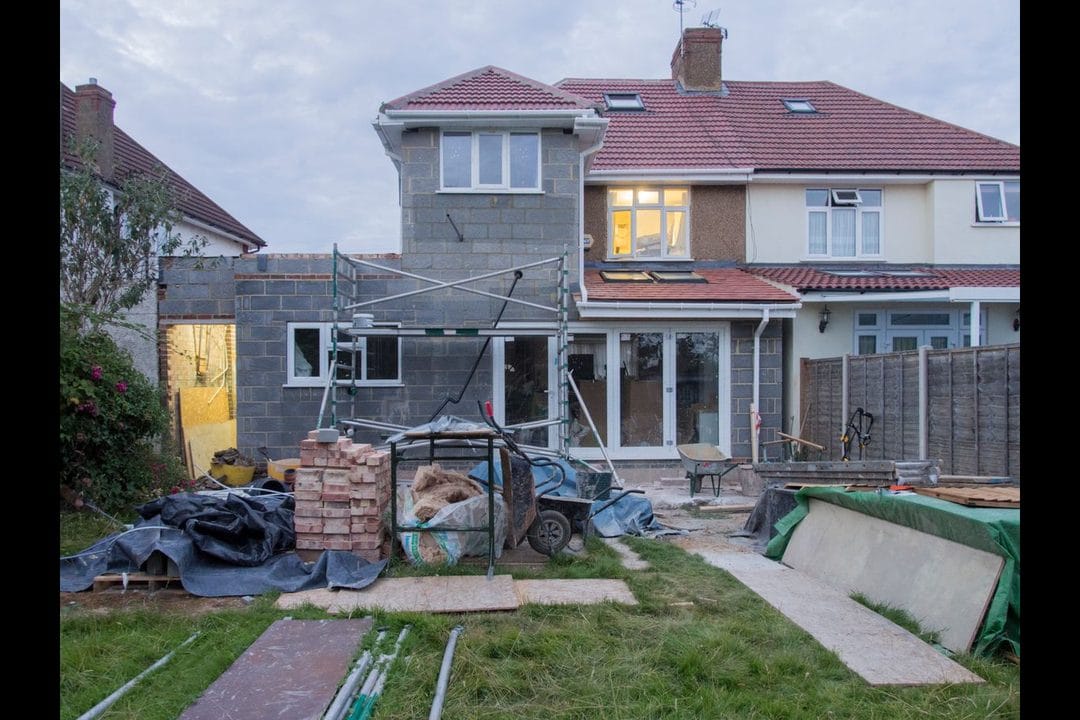
The house was gone by Friday. Three offers came in on a foreclosed duplex in Winston-Salem on Tuesday afternoon, the seller's agent gave everyone until Thursday at noon to submit "highest and best," and the winning buyer had a signed contract, a wired earnest deposit and a hard money commitment letter attached to his offer before most conventional buyers had finished scheduling their first walkthrough. A bank could not have moved that fast. Nobody's bank moves that fast — underwriting a conventional purchase loan still runs four to six weeks even with a clean file, and a bank will not lend against a duplex with a collapsed porch roof and no working kitchen anyway. That gap between "the deal closes this week" and "the bank is ready in six weeks" is the entire reason hard money lending exists, and in 2026, with inventory finally loosening in Sun Belt and Midwest metros alike, it has become the default financing tool for anyone buying distressed property to flip. It's also expensive enough that plenty of investors misuse it, treating a bridge product like permanent financing and paying for the mistake in interest they never modeled.
What a hard money loan actually is
A hard money loan is short-term financing secured by the property itself rather than by the borrower's income, credit score or debt-to-income ratio. Lenders like Kiavi, RCN Capital and Lima One Capital underwrite the deal, not the person — they want to know the purchase price, the after-repair value (ARV), the scope of the renovation and the borrower's track record of finished flips. A W-2 pay stub barely matters. A borrower with a 580 credit score and three completed flips in the last two years will get better terms than a borrower with an 800 score and no renovation history, because the lender is pricing the risk of the project, not the risk of the person defaulting on a car loan.
Terms typically run six to eighteen months, interest-only, with the full principal due at the end via sale of the property or a refinance into a conventional or DSCR loan. Loan-to-value sits at 65% to 75% of the after-repair value rather than the purchase price — that distinction matters enormously, because it means a lender might fund $180,000 against a house you're buying for $120,000, on the assumption it will be worth $260,000 once the kitchen, roof and HVAC are done. Get the ARV estimate wrong by 15%, and the math that looked comfortable on the term sheet turns into a loan the property can no longer cover.
The real cost, in numbers that matter
Rates on hard money loans in 2026 run 10.5% to 14%, well above the roughly 6.7% average on a 30-year conventional mortgage, and lenders charge two to four points up front — origination fees calculated as a percentage of the loan amount, due at closing, on top of the interest. On a $200,000 loan at 12% with three points, a borrower pays $6,000 just to open the loan, then roughly $2,000 a month in interest-only payments. Run that loan for the full nine months a typical flip takes from purchase to resale, and financing alone costs north of $24,000 before a single tile is laid. That is not a rounding error. It is the single biggest line item after the renovation budget itself, and investors who skip modeling it against a realistic timeline are the ones who end up selling at a loss just to stop the interest meter. Stretch the hold to twelve months because a permit inspection got delayed twice, and that $24,000 line grows toward $32,000 without a single design decision changing.
Renovation funds don't arrive in a lump sum. Lenders release rehab money on a draw schedule, tied to inspections at defined milestones — demo complete, rough plumbing and electrical passed, drywall up, final walkthrough. A borrower fronts the first phase of work out of pocket, submits an inspection request, waits three to seven business days for the lender's inspector to sign off, and only then gets reimbursed and unlocked for the next draw. Contractors who've only worked with retail clients often don't understand this rhythm and quote payment terms that assume cash on demand — a mismatch that stalls more flips than bad tile choices ever do.
Run the numbers on a real example. Say you buy a distressed three-bedroom for $150,000, the ARV comes in at $260,000 after a $60,000 renovation, and a hard money lender funds $210,000 (65% of ARV) at 12% interest with three points. Points cost $6,300 up front. Interest over a seven-month hold runs about $14,700. Add closing costs on both ends, roughly $8,000, and total transaction cost lands near $29,000 before the contractor is paid a dollar of profit margin. Sell at $260,000 and the gross spread over purchase-plus-rehab is $50,000 — subtract financing and closing costs and the real return sits closer to $21,000, a fraction of what the ARV number alone made the deal look like. This is the calculation flippers skip when they get excited about a good comp, and it's the one that actually decides whether the project was worth doing.
When it's the right call — and when it isn't
Take the hard money route when speed decides whether you win the deal at all: auction properties, off-market wholesaler assignments with a 72-hour close clause, or REO listings where the bank wants cash-equivalent certainty. Skip it when your timeline has slack and your credit profile qualifies for a conventional renovation product — an FHA 203(k) or a Fannie Mae HomeStyle loan will run 200 to 400 basis points cheaper and give you up to a year to finish the work instead of racing an interest clock that never stops.
Here's the part most hard money pitches leave out: the loan is only as good as your exit. If your plan is to sell within nine months and the local market cools — buyer financing tightens, comparable sales slip, a competing flip two streets over lists at a price that resets what appraisers will support — you're stuck paying 12% on a property that won't move at your target price, with a lender who has no interest in extending the note past its maturity date. Build a six-month buffer into your resale timeline, not a best-case one, or the fast money that got you the deal becomes the slow bleed that kills the return.
Finding a lender who won't bury you in fine print
Compare at least three term sheets before signing anything — rates cluster in a narrow band, but junk fees don't. Ask specifically about prepayment penalties (some hard money notes charge a minimum interest guarantee even if you pay off in month two), draw inspection fees (typically $150 to $300 per draw, and they add up across a six-draw rehab), and whether the lender requires a personal guarantee if you're borrowing through an LLC. National players like Kiavi and RCN Capital publish rate sheets online and close in as little as five to ten business days; regional and local hard money lenders often move faster still, sometimes closing in 48 hours, but their pricing varies more and their reputations live and die on word of mouth among local investor meetups.
Don't borrow more than the deal needs just because a lender offers it. Over-leveraging a flip on the theory that "the ARV supports it" is how a single missed comp or an unexpected foundation repair turns a manageable project into a loan you can't service. The investors who use hard money well treat it the way it's meant to be used — a bridge across a specific, short gap, not a permanent financing strategy dressed up as one.
Structuring it so one bad flip doesn't take down the rest
Most hard money lenders will only fund to an LLC, not to an individual borrower — and that's worth doing even if a particular lender doesn't insist on it. Hold each active flip in its own single-asset LLC rather than stacking multiple properties under one entity, so a lawsuit or a lien on one project can't reach the equity sitting in the others. Expect the lender to still require a personal guarantee behind the LLC on your first one or two deals; most drop that requirement once you've closed three or four flips with them and built a payment record. Carry builder's risk insurance for the duration of the rehab, not a standard homeowner's policy — a standard policy won't pay out on a property with an open contractor's permit and no one living in it, and the lender's own coverage requirement will specify this in the loan documents anyway.