Accessory Dwelling Units in 2026: The Zoning Loophole Turning Backyards Into Rental Income
Backyard cottages have gone from zoning footnote to serious investment vehicle. A breakdown of what an ADU actually costs to build, how to finance one, and where the rent covers the mortgage in 2026.
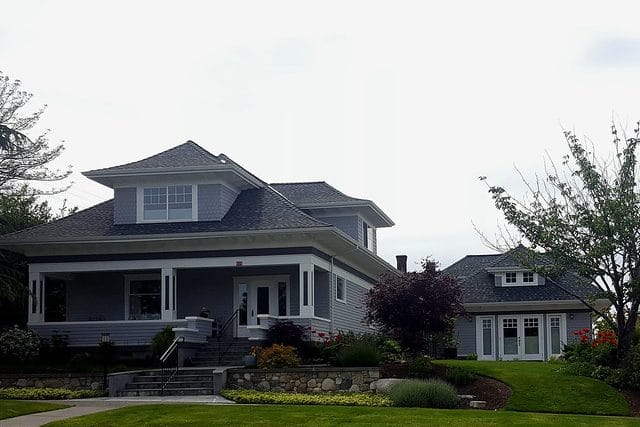
In Los Angeles County, roughly one in five new residential permits filed last year was for a detached structure under 1,200 square feet sitting behind an existing house — not a garage conversion, not a shed, but a fully code-compliant second home. The city that pioneered accessory dwelling unit reform a decade ago has become the proof of concept for a financing model now spreading fast through Denver, Austin, Portland, and a growing list of mid-size metros: buy a single-family lot, add a rental unit in the backyard, and let a tenant cover a meaningful slice of the mortgage.
The Reform That Started in California and Didn't Stay There
California's ADU laws — Assembly Bill 68, Senate Bill 9, and the 2023 update that stripped local owner-occupancy requirements in most cities — did something zoning reform almost never does: it worked fast enough that other states copied the language directly. Washington passed statewide ADU legalization in 2023. Colorado followed in 2024, overriding single-family-only zoning in cities over 1,000 residents. Montana, of all places, now allows one ADU by right on any residential lot inside city limits. Even holdout states are moving — Texas has no statewide mandate, but Austin and Houston rewrote their own codes independently once the property-tax-revenue argument landed with city councils that had been resisting for years. If your state hasn't passed something similar yet, check again in a year — this is one of the fastest-moving areas of housing policy in the country, and the political coalition behind it (property owners who want the income, renters who want the supply) crosses party lines in a way most zoning fights don't. That coalition is also why the reform has proven durable rather than a one-term experiment: a homeowner who added a rental unit under the old rules has every incentive to defend the law that let them do it.
What changed practically is simple: before these laws, adding a second unit meant a conditional use permit, a public hearing, and often outright denial from a planning commission that didn't want density on a single-family street. Now, in a compliant jurisdiction, an ADU that meets objective standards — setbacks, height, size — gets approved administratively, no hearing required. Ministerial approval is the term planners use for it, and it's the single biggest reason ADU permits in California went from under 2,000 a year in 2016 to over 28,000 in 2023.
What a Backyard Unit Actually Costs to Build in 2026
Cost is where most first-time ADU builders get blindsided, because the number they hear at a dinner party — "we did ours for $80,000" — almost never includes the same scope you're pricing. A detached, stick-built ADU with a full kitchen and bathroom typically runs $180,000 to $260,000 in coastal California markets, $140,000 to $190,000 in Denver or Austin, and can come in under $130,000 in cheaper metros like Boise or Tulsa, according to 2025-2026 contractor bid data compiled by the ADU financing platform Nod. Prefab and modular options from companies like Abodu and United Dwelling shave 15-20% off site-built costs by moving framing and finishing into a factory, but they add site-prep and utility-hookup costs that vendors routinely leave out of the headline price.
Attached ADUs — garage conversions, basement units — cost less because the shell already exists. A garage conversion with new plumbing and a mini-split system typically lands between $60,000 and $110,000 depending on how much of the existing structure is usable as-is. That's the honest starting point for anyone doing this math on a budget: don't build detached unless the lot forces it or the rent premium clearly justifies the extra $80,000-$120,000. A converted garage that rents for $1,400 a month pencils out faster than a detached unit renting for $1,900, once you run the actual payback period.
The Financing Gap Nobody Mentions at the Open House
Here's the part real estate agents tend to skip: most banks won't lend against an ADU's projected rental income the way they'd underwrite a duplex purchase, because the unit doesn't exist yet and appraisers historically had no reliable way to value it. That changed in 2023, when Freddie Mac started allowing ADU rental income in loan qualification for purchase transactions, and Fannie Mae followed with updated appraisal guidance (Selling Guide B4-1.3-05) that formally recognizes ADUs as a value-adding feature rather than an oddity to ignore. In practice, most conventional lenders still want the ADU built and rented for a minimum stabilization period — often six to twelve months — before they'll count the income toward a refinance.
The financing tools that actually work at construction time are narrower than the marketing suggests. A HomeStyle Renovation loan or a cash-out refinance against existing equity covers most owner-builders; a small but growing set of specialty lenders — RenoFi and Figure among them — write second-lien construction loans specifically against projected ADU value rather than current home equity, which matters if you bought recently and haven't built up much equity yet. Home equity lines of credit remain the default for anyone with 20%+ equity already sitting in the primary residence, mostly because HELOC approval takes weeks, not the two-to-three months a purpose-built construction loan can take. Owner-builders who go the HELOC route should still budget for a draw schedule and a contingency reserve, because a variable-rate line that gets tapped faster than planned is the fastest way to turn a well-priced project into an expensive one. A fixed-rate construction-to-permanent loan costs more upfront in fees but removes that particular risk entirely, which is worth paying for on any build over $150,000. Shop at least three lenders before committing, because the spread between the cheapest and most expensive quote on an ADU-specific product regularly runs 1.5-2 percentage points — a gap that dwarfs any savings from picking the contractor with the lowest bid.
None of this is complicated, and none of it is free. Expect to pay 7.5%-9% on most of these products in mid-2026, which means the interest carry during the six-to-nine-month build window is a real line item — often $8,000-$15,000 on a $180,000 project — that a lot of ADU calculators floating around online quietly leave out.
Where the Rent Actually Covers the Mortgage
The metros where ADU economics work best share one trait: a rent-to-construction-cost ratio that's out of line with the rest of the country, usually because zoning restricted supply for decades while population kept growing. Los Angeles fits that profile — a detached ADU costing $220,000 to build can rent for $2,200-$2,800 a month in most non-luxury neighborhoods, which puts gross annual yield in the 12-15% range before accounting for vacancy, maintenance, and the property tax reassessment California triggers on new construction. Denver and Portland run a similar playbook at lower absolute numbers: build cost around $160,000, rent around $1,600-$1,900, yield in a comparable band.
Sun Belt metros where construction is cheap are, paradoxically, often the worse bet. Land is abundant, single-family zoning was never that restrictive to begin with, and new apartment supply keeps rents pinned down — so a $140,000 ADU in a fast-growing Texas suburb might only command $1,300 a month, because a brand-new 800-square-foot apartment three blocks away rents for the same price with a pool and a gym attached. Run the comparable-rent numbers for actual small units in your specific zip code before assuming national ADU economics apply locally, not the headline growth statistics for the metro as a whole.
The Permitting Bottleneck Still Standing in the Way
Legal reform hasn't fixed everything. Ministerial approval on paper still runs into planning departments that are understaffed, unfamiliar with the new rules, or simply slow — a permit that should take 60 days by statute can stretch to five or six months in cities that haven't updated their internal review process to match the law. San Diego and Sacramento have built dedicated ADU fast-track programs with pre-approved plan sets that cut review time to under three weeks; most cities haven't, and you won't know which category yours falls into until you call the planning counter directly and ask how many ADU permits they processed last year.
Utility connections are the other quiet cost trap. Some water and power utilities charge a separate hookup or capacity fee for a second dwelling unit on one lot, and those fees run anywhere from a few hundred dollars to $15,000-$20,000 depending on the utility district — Los Angeles Department of Water and Power waived most of these for ADUs years ago, but plenty of smaller municipal utilities never followed suit. Ask the utility, not just the general contractor, before signing a construction contract.
Who's Winning This Game — and Who's Sitting on a Half-Finished Slab
The investors doing well with ADUs right now aren't the ones chasing the highest theoretical yield.
They're the ones who bought a lot with alley access or a wide side yard specifically because it made detached construction cheaper, ran real comparable-rent numbers for units under 900 square feet in that exact neighborhood before committing to a design, and used a contractor who had already pulled ADU permits in that city at least a dozen times. Skip that last part and you'll pay the education tax — the extra weeks and change orders that come from a builder learning your local planning department's quirks on your project instead of their last one.
The people stuck with a half-finished slab and a maxed-out HELOC are almost always the ones who priced the project off a national average, financed it against a construction loan with a rate that reset upward mid-build, and never called the water utility. That's not a rare story — it's the modal failure case, and it's avoidable with about four phone calls before breaking ground: the planning department, the water utility, two local contractors with ADU-specific references, and a lender who's actually closed an ADU construction loan in the past year rather than one who's heard of the product.