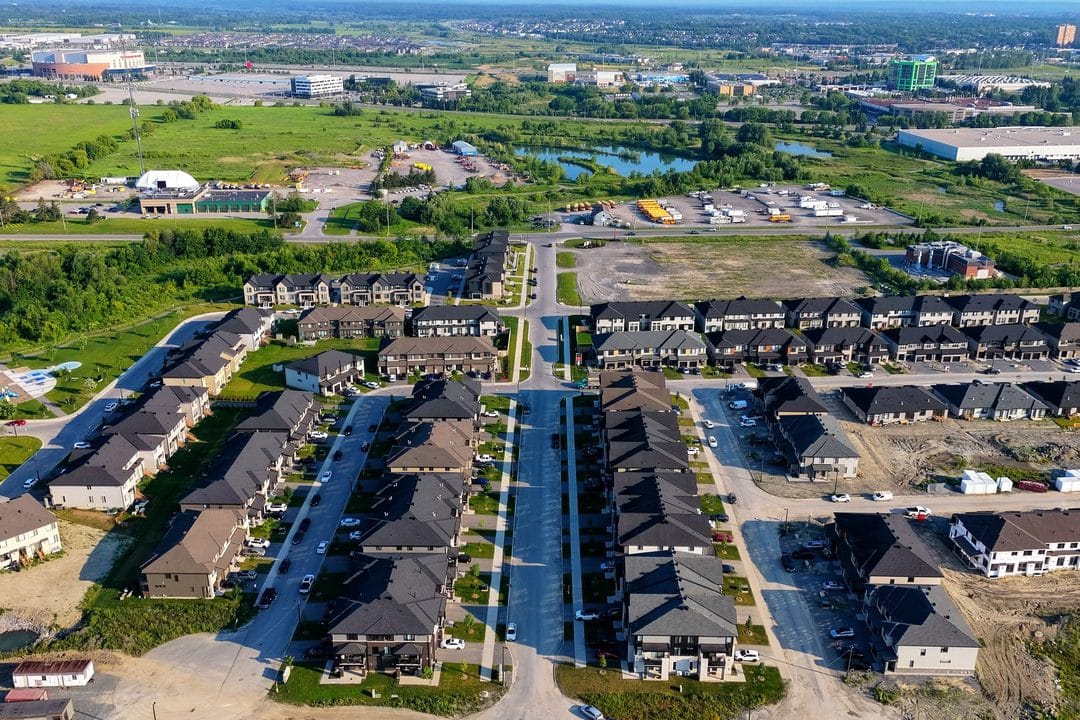
Drive through the outer ring of Phoenix, Atlanta, or Dallas-Fort Worth this year and you'll pass subdivisions that look, at first glance, exactly like the ones sold to first-time buyers a decade ago — single-story houses with two-car garages, a shared dog park, a clubhouse with a pool. Look closer at the leasing sign out front, though, and something's different: there's no "Homes From the Low $400s" banner. There's a phone number and the word "Now Leasing." Every house in that community was built to be a rental, and every house in it is going to stay one, indefinitely, under the ownership of a single institutional landlord.
That's build-to-rent, and it has quietly become one of the more consequential shifts in American housing since the 2008 crash reshaped who owns single-family homes. This isn't a hedge fund buying up existing houses on the resale market, which was the story everyone was angry about in 2021 and 2022. This is builders and investors constructing brand-new, purpose-built rental subdivisions from the ground up, at scale, specifically because renting them out pencils out better than selling them ever would at today's rates.
What "build-to-rent" actually means
Build-to-rent (BTR) communities are single-family or townhome developments built and owned as a single asset from day one, rather than sold off individually to owner-occupants. That's the core distinction from the "scattered-site" single-family rental model that Invitation Homes and American Homes 4 Rent (AMH) pioneered after the foreclosure crisis, where a company buys existing houses one at a time, spread across a metro area, and manages them as a loosely connected portfolio.
A BTR community, by contrast, is designed as a rental product from the architectural drawings onward — narrower lots to fit more units per acre, professionally managed common areas, centralized maintenance staff on-site or nearby, and unit mixes chosen for renter demand rather than buyer preference. Builders like D.R. Horton (through its Forestar and Express Homes brands) and Lennar have both stood up dedicated BTR divisions in the past few years, and NexMetro's Christopher Todd Communities has built an entire company around gated, resort-style rental cottages aimed squarely at people who want a house, a yard, and zero home-maintenance calls.
Why the money is flooding in right now
The math is almost embarrassingly simple at a 6.3% mortgage rate. A builder sitting on finished lots has two options: sell the houses to individual buyers who now need a household income well north of $100,000 in most Sun Belt metros to qualify, or lease them to renters who face no underwriting bar beyond a credit check and two months' income. When resale demand softens because monthly payments have priced out a big chunk of would-be buyers, renting the inventory out becomes the more reliable exit — and institutional capital has noticed that reliability is exactly what it's shopping for.
Private equity firms like Pretium Partners and pension-fund-backed platforms have been the biggest source of capital behind the recent wave, drawn by yields that beat what multifamily apartment REITs are currently posting and by turnover rates that run lower than traditional apartments — families with kids in a local school district don't move as often as a 26-year-old in a downtown high-rise. Homebuilders, for their part, get a guaranteed institutional buyer for entire phases of a development before a single foundation is poured, which removes the sales-absorption risk that's been punishing public builders' stock prices through 2026. It's a trade that works for both sides of the table, even if the person who eventually moves in never gets a seat at it.
Where it's actually getting built
The concentration is heavily Sun Belt. Phoenix remains the epicenter — metro-area BTR construction there has been running at a pace that dwarfs most of the rest of the country, helped along by cheap land on the fringes of Maricopa and Pinal counties and a renter base that's grown faster than the ownership-ready population. Atlanta is close behind, with BTR communities spreading out along the I-20 and I-85 corridors well past the metro core, in places where land is still affordable enough to make the lot-to-unit math work.
Dallas-Fort Worth and Charlotte round out the top tier, and both share a pattern worth noting: the BTR product isn't showing up in the urban core, where land costs make it unworkable, but in the second- and third-ring suburbs — the same places that would, in a normal cycle, be full of entry-level houses for sale. That overlap is not a coincidence, and it's the part of this story that should worry anyone hoping the starter-home shortage fixes itself.
What renters actually get — and what they give up
For renters, the appeal is real. You get a full house with a yard instead of a stacked apartment unit, professional on-site maintenance that answers within a day instead of the usual scattered-site landlord runaround, and amenities — pools, dog parks, sometimes coworking pods — that no individual landlord could justify building for a single rental house. Leases in these communities typically run $1,900 to $2,700 a month for a three-bedroom home in the Sun Belt metros above, depending on square footage and how new the community is, which is often cheaper month-to-month than owning the equivalent house would be right now once you factor in a 6.3% mortgage, property tax, and insurance.
What you don't get is any of the equity. Every payment goes to a landlord whose institutional investors are, by design, capturing all the appreciation on that land and structure. Rent increases at renewal are also less negotiable than they'd be with an individual landlord — professionally managed portfolios tend to run algorithmic renewal pricing, and there's no homeowner on the other end of the phone who might cut you a break because you've been a good tenant for four years. If building wealth through housing is part of your plan, a BTR lease is a place to live, not a step toward that goal.
The starter-home question nobody wants to answer directly
Here's the uncomfortable part. Every acre a builder commits to a BTR deal is an acre that isn't producing houses for sale — and the Sun Belt suburbs where BTR is concentrated are exactly the metros with the worst entry-level inventory shortages in the country. Builder trade groups will argue, correctly, that BTR adds net new housing supply that wouldn't otherwise exist, since a lot of these projects wouldn't get built at all without a guaranteed institutional buyer locked in ahead of construction. That's a fair point, and it's also true that it doesn't help a 32-year-old teacher trying to buy her first house in Gilbert, Arizona, who now competes for scarce entry-level lots against a builder that would rather sell the whole phase to an institution in one transaction than deal with two hundred individual mortgage closings.
Both things are true at once, which is exactly why this debate hasn't resolved itself the way the 2021 "hedge funds are buying all the houses" panic eventually did once data showed institutional buyers held a small single-digit share of the existing-home stock. BTR is a structurally different animal — it's new supply, aimed permanently at renters, built on land that would otherwise have gone to owner-occupied product in a tighter capital environment.
What to do with this if you're renting or buying
If you're weighing a build-to-rent lease against buying at today's rates, run the actual numbers rather than the headline monthly payment. Compare the BTR rent against a mortgage payment on a comparable resale house in the same school district, including tax and insurance, and be honest about how long you'd stay — under three years, renting usually wins outright once you count closing costs and the risk of a soft resale market when you need to sell.
- Ask the leasing office directly what renewal increases have looked like over the past two years — institutional operators will usually share this, and a pattern of 8%+ annual bumps should change your math
- Check whether the community allows month-to-month renewal after the first lease term, since flexibility is one of BTR's real advantages over buying
- If you're a buyer competing in a Sun Belt suburb, widen your search to metros where BTR construction hasn't concentrated yet — Pittsburgh, Cleveland, and Indianapolis are seeing far less of this institutional lot-buying pressure
- Don't assume a BTR community is cheaper long-term just because the entry rent looks lower than a mortgage payment — model it out to year five, not year one
The build-to-rent wave isn't going away while mortgage rates sit above 6%, and it's reshaping which Sun Belt neighborhoods you can actually buy into versus which ones you can only ever lease. Knowing which category a listing falls into before you fall in love with the floor plan will save you a wasted afternoon with a leasing agent who was never going to sell you the house anyway.